
Keeping a roof clean and well-maintained is a big part of looking after your home in Adelaide. How often you clean your roof really makes a difference to how well it stands up against mould, algae, dirt build-up, and wearing out too soon. This guide will give you practical advice on when to clean your roof, how our local climate and your roof's material change those recommendations, what visible signs tell you it's time for action, and the best times of year for cleaning here in Adelaide. Many homeowners wonder if a yearly sweep is enough or if they need to get stuck in more often. This article lays out clear rules of thumb, specific advice for different materials, and an easy maintenance plan you can follow. You'll learn the ideal regular schedule for common roofing materials, five signs that should prompt a clean or inspection, why cleaning makes your roof last longer and costs less in the long run, and when to call in the pros. We've packed it with Adelaide-focused tips and actionable steps so you can set a predictable schedule and cut down the risk of expensive repairs.
What's the Best Roof Cleaning Schedule for Adelaide Homes?
The right roof cleaning schedule for Adelaide homes balances keeping biological growth in check with looking after your roof materials. Generally, a baseline of every one to two years works well for many properties, with a few tweaks for local exposure and what your roof is made of. This regular clean helps reduce moss and algae build-up that can trap moisture and speed up deterioration. It also means clearer water flow to your gutters and keeps your shingles and tiles in good nick. Setting up a routine helps homeowners predict maintenance costs and plan inspections before small issues turn into big headaches. The quick-reference table below translates that general advice into specific recommendations for different materials and the right cleaning methods for Adelaide conditions.
Different roofing materials need different cleaning schedules and approaches:
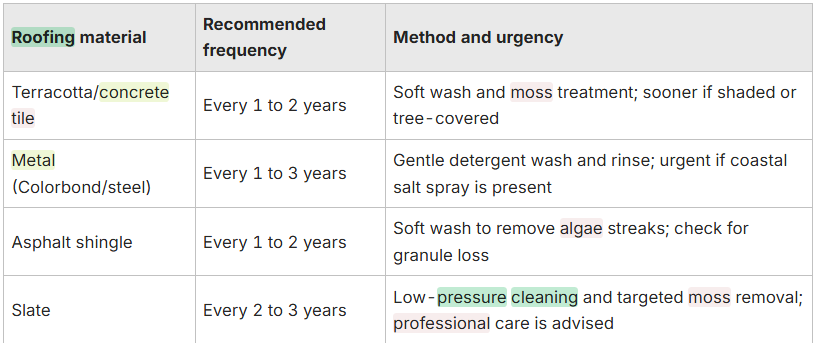
This table gives homeowners a clear guide to frequency and technique, so they can match cleaning to their roof material and risk. With material-specific timing sorted, homeowners can decide if annual or bi-annual schedules are right for their place based on their site conditions.
How Often Should You Clean Your Roof: Yearly vs. Every Six Months
Yearly cleaning means a professional or thorough homeowner clean roughly once every 12 months. This suits properties with not many trees, limited shade, and minimal exposure to the coast. A yearly clean stops light algae and debris from building up before it causes stains or holds moisture, helping gutters and valleys stay clear. Cleaning every six to eight months, or bi-annually, is better for homes with lots of tree cover, constant shade, or noticeable rapid moss growth. This schedule breaks up the biological cycles that thrive in shaded spots. Thinking about your immediate surroundings helps you decide. Leafy inner-suburban Adelaide blocks often do better with a clean every six months, while open suburban or urban roofs usually get by with a yearly tidy up.
What Factors Influence Your Roof Cleaning Schedule in Adelaide?
Several local factors change how often your roof needs a clean. These include tree coverage, the microclimate around your home, how close you are to the coast, your roofing material, and how old your roof is. Lots of trees mean more leaves and debris falling, and it encourages moss. Being near the coast brings salt spray, which might mean more frequent rinsing to stop metal roofs from corroding. Older roofs often need gentler, more frequent checks because existing wear makes them more prone to damage during cleaning. Understanding these influences helps homeowners prioritise inspections and choose the right cleaning method to protect specific materials and make their roof last longer.
- Tree coverage and leaf fall
- How much shade and humidity your roof gets
- Coastal salt exposure and wind-driven debris
- Your roof material and its age
These variables together help you work out if a yearly clean is enough, or if you should consider cleaning every six months or after specific events.
What Are the Key Signs That Your Roof Needs Cleaning?
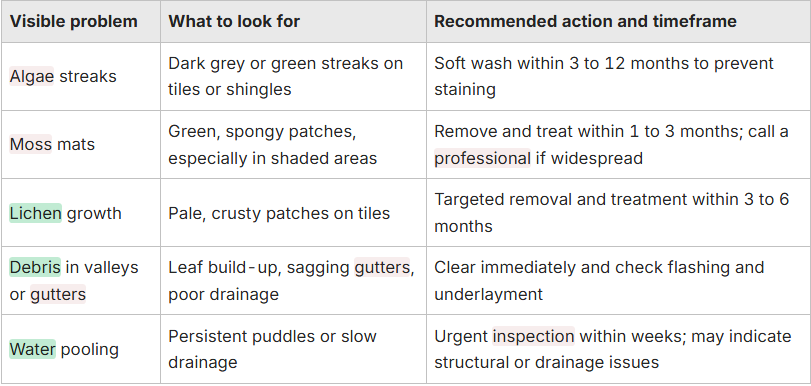
A timely inspection will show clear visual and functional signs that your roof needs a clean. Look out for biological staining, moss mats, blocked gutters, and water pooling as the main clues. These signs point to different levels of urgency. Surface algae might just be cosmetic and can be dealt with soon, while extensive moss growth and blocked valleys can trap moisture and lead to material failure if not sorted quickly.
Below is a handy table linking visible signs to recommended action and timeframe, so homeowners can prioritise problems and decide between DIY maintenance and calling in a professional.
How to Spot Moss, Algae, and Lichen Growth on Your Roof
Moss looks like dense, cushion-like green patches that hold moisture and can lift tiles or shingles. Algae shows up as dark streaks often running downhill with water flow. Lichen forms flat, pale colonies that stick tightly to surfaces. Each organism tells you about different moisture and light conditions. Moss prefers shaded, damp spots, algae can handle sun and spreads via airborne spores, and lichen signals long-term colonisation of the surface. Spotting them early matters because moss removal usually needs physical lifting plus treatment, algae often responds well to soft wash algae treatments, and lichen removal requires more careful scraping and biocide application. Knowing which organism is present helps you choose the right treatment and how urgently you need to act.
What Are the Visual and Structural Signs of Roof Debris and Damage?
Debris accumulation shows as leaves and twigs building up in valleys and gutters. This leads to blocked downpipes and creates a wet environment that speeds up decay. Visually, you'll notice sagging gutters or water overflowing like waterfalls during rain. Structural signs include displaced tiles, missing granules on shingles, loose flashing, and repeated water stains on ceilings. These hint at compromised waterproofing that cleaning alone won't fix. Regular checks of gutters, valleys, and flashings help you spot problems early. Immediate action is recommended for blocked gutters and displaced tiles, while minor debris can be scheduled into your next maintenance window. Recognising these signs lets homeowners sequence cleaning, gutter clearing, and repairs before a more expensive replacement becomes necessary.
- Check gutters and downpipes for blockages and clear them immediately if needed.
- Inspect valleys and flashings for displaced material and arrange repairs if leaks are suspected.
- Schedule a professional inspection when structural issues or widespread material wear are evident.
Prompt attention to these things reduces the risk of water damage inside your home and keeps your roof systems working as they should.
Why Is Regular Roof Cleaning Important for Adelaide Homeowners?
Regular roof cleaning protects your roof's integrity, stops moisture-related decay, improves energy performance, and keeps your home looking good. This all adds up to saving you money over the life of your roof. Removing moss and algae stops moisture retention that speeds up tile and shingle deterioration, which in turn reduces the chance of needing replacements halfway through your roof's life. A cleaner roof also reflects heat more effectively than a heavily shaded, biologically stained surface. This can modestly reduce summer cooling costs in Adelaide's climate. For homeowners, the financial argument is clear. Routine maintenance often costs a fraction of the price of patch repairs or early replacement, and it helps maintain resale value through visible upkeep.
We approach cleaning with a preventative maintenance philosophy. We focus on scheduled inspections and targeted treatments to help you avoid major repairs. As a local, education-focused roofing provider in Adelaide, we prioritise methods that suit our local climate and materials. We help homeowners turn cleaning frequency into a simple maintenance plan. Our local expertise supports better timing choices and ensures we use the correct techniques to maximise lifespan and minimise cleaning-related damage.
How Does Roof Cleaning Make Your Roof Last Longer?
Cleaning removes organisms and debris that physically and chemically degrade roofing materials. Moss holds moisture against tiles, algae can break down surface coatings, and debris in valleys speeds up corrosion and rot in underlayments. By preventing long periods of moisture exposure and improving drainage, routine cleaning reduces freeze-thaw and corrosion cycles that shorten material life. This means a conservative lifespan extension of several years for many roofs. Regular cleaning also allows for early detection of minor issues, enabling timely patching before small failures turn into large-scale replacements. These mechanisms explain why a preventative schedule creates long-term savings and greater predictability for homeowners.
What Are the Energy Efficiency and Curb Appeal Benefits of a Clean Roof?
A clean roof surface reflects more solar radiation than a heavily stained or biological-covered roof. This can reduce heat absorption and lower cooling costs during Adelaide's warmer months. This difference in reflectivity results in small but meaningful cooling savings, particularly for homes with dark roofing or limited insulation. Visually, a clean roof boosts curb appeal, signalling to buyers and neighbours that the property is well-maintained and potentially improving its market presentation. Together, these benefits, energy savings and improved appearance, reinforce the return on investment from routine roof cleaning and support scheduling cleaning as part of overall home maintenance.
- Extended roof life through moisture and debris control.
- Lower cooling costs due to improved reflectivity.
- Enhanced curb appeal and better property presentation.
These outcomes show why regular cleaning is more than just cosmetic. It's a smart home maintenance activity that preserves your asset's value.
When Is the Best Time of Year to Clean Your Roof in Adelaide?
Autumn is generally the ideal season for roof cleaning in Adelaide. It follows the drier, warmer conditions that reduce immediate regrowth and comes before the wetter months when roofs cop more storms. A post-Autumn clean provides a cleaner surface going into winter. Autumn weather tends to be more predictable with lower contractor demand than spring, making it easier to schedule thorough cleans and inspections. Spring is a good alternative after heavy winter debris or storm seasons, especially when gutters and valleys have accumulated material that could block spring runoff. Try to avoid scheduling cleaning during extended wet periods and choose a dry forecast window to allow treatments to bind and biocides to work effectively.
Why Is Autumn Recommended for Roof Cleaning in Adelaide?
Autumn's climate in Adelaide offers a balance of lower biological activity and drier weather. This allows cleaning agents to dry and stick properly, and it limits immediate regrowth. Cleaning in Autumn also gets roofs ready to better handle the wet season by clearing gutters and valleys before heavy rainfall. Contractors are often more available outside the peak of late spring and early summer, which means more flexibility for scheduling and quicker response times. Preparing your roof in Autumn reduces the chance of winter leaks and ensures drainage systems work effectively when storms hit.
Can Spring Cleaning Help Maintain Your Roof's Condition?
Spring cleaning is valuable after winter storms when branches, leaves, and debris have built up, and before the high UV period that might make surface staining worse. It can be a useful extra clean after severe weather or if you missed the Autumn clean. It helps clear organic material that would otherwise encourage summer algae growth. However, spring cleaning might coincide with wetter, changeable weather, so picking a stable dry window is important to make sure treatments work. Use spring cleaning as a targeted intervention after known events rather than your main yearly cleaning choice for most Adelaide homes.
What Professional Roof Cleaning Services Does Adelaide Roofing & Construction Offer?
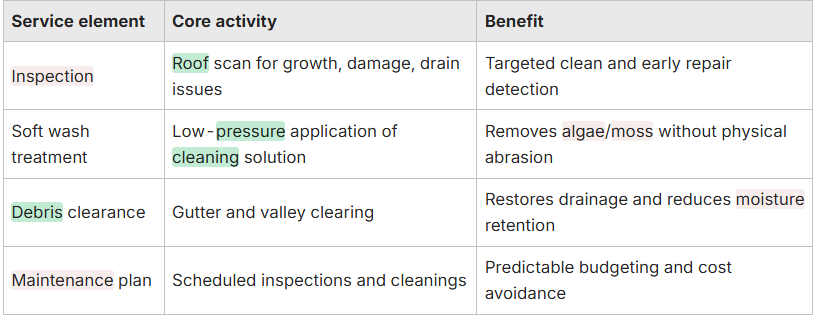
We provide a range of professional roof maintenance services specifically designed for Adelaide's climate and common roofing materials. We focus on inspection-led cleaning, soft washing, targeted moss and algae treatment, debris removal, and preventative maintenance plans. We use soft wash chemical treatments and low-pressure rinsing to neutralise biological growth without damaging tiles or shingles. We also include an inspection of gutters, flashings, and valleys to spot any other issues. Our local expertise ensures cleaning methods match material needs, reducing the risk of damage from inappropriate pressure washing and improving long-term results for homeowners. Our focus on the local service area and preventative philosophy helps clients turn cleaning into an ongoing maintenance program.
We use methods designed to protect roofing materials and underlayers while removing growth and blockages:
How Do Professional Roof Cleaning Methods Protect Your Roof?
Professional methods focus on soft wash techniques that combine biodegradable cleaning agents and low-pressure application to kill moss, algae, and lichen without stripping protective coatings or dislodging tiles. Pressure washing is used selectively and at safe settings. Too much pressure can remove granules from shingles or crack brittle tiles, so we choose the method and pressure based on the material. Combining chemical treatment with manual removal where needed ensures organisms are removed and regrowth is minimised, all while maintaining material warranties and integrity. Choosing the correct professional method reduces cleaning-induced damage and supports longer-term roof performance.
What Are the Benefits of Choosing Adelaide Roofing & Construction for Your Roof Maintenance?
Choosing Adelaide Roofing and Construction, a local, Adelaide-focused company, means you get climate-specific knowledge that matches cleaning schedules and methods to local tree cover patterns, humidity, and coastal influences. This reduces the risk of using a one-size-fits-all approach. We emphasise preventative maintenance plans that schedule inspections and targeted cleaning to stop issues from escalating into major repairs. This helps homeowners turn reactive fixes into predictable maintenance. Our educational focus helps homeowners understand why a chosen schedule applies to their home and what signs to look out for between our professional visits. For homeowners seeking guidance, our local expertise bridges the gap between general advice and specific action for their property.
- Methods matched to your material and Adelaide's microclimate.
- Safer cleaning that minimises damage risk.
- Predictable maintenance scheduling to reduce long-term costs.
These advantages explain why professional involvement is often the most cost-effective path for many homeowners.
How Can You Create a Roof Cleaning Schedule That Works for Your Adelaide Home?
Building a practical roof cleaning schedule starts with a simple assessment of your roof material, tree cover, exposure, and any recent biological growth. From that baseline, you can set inspection and cleaning intervals. A good preventative plan combines monthly homeowner checks, an annual or bi-annual professional inspection, and cleaning intervals set according to material and exposure, as described earlier.
Below is a recommended comparison of homeowner tasks versus professional services, showing frequency, who should do the task, and a general cost estimate to help with planning and prioritisation.
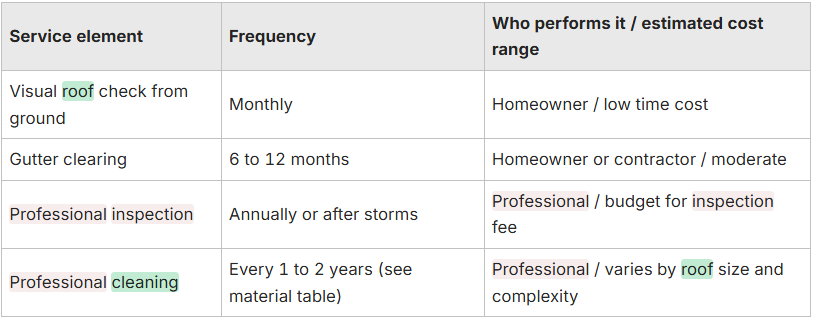
Start with this template and adjust it as you notice growth patterns and weather impacts. Combining homeowner vigilance with scheduled professional input reduces surprises. The next section explains how to turn this template into a simple annual calendar and when to call for immediate professional help.
How to Develop a Preventative Roof Maintenance Plan Based on Cleaning Frequency
A preventative plan coordinates monthly homeowner checks, a yearly professional inspection timed around Autumn, and cleaning intervals matched to your material and exposure. Begin by mapping out an annual calendar: monthly visual checks, gutter clearing before the wet season, an Autumn professional inspection and cleaning if due, and an intermediate spring check after winter storms. Document your findings and take photos during each check to track trends like accelerating moss coverage or repeated debris issues. This disciplined approach turns cleaning frequency into a predictable maintenance loop that reduces emergency repairs and spreads costs over time.
When Should You Schedule Professional Inspections and Cleanings?
Schedule professional roofing inspections at least once a year and always after severe storms, noticeable moss or algae growth that's more than just small patches, or when you spot water pooling and drainage issues. Immediate professional attention is needed if moss covers large sections of your roof, if tiles appear displaced, or if you notice water stains inside your home. These are red flags that simple cleaning won't fix. For a regular schedule, many Adelaide homes benefit from an Autumn professional inspection and cleaning every one to two years, depending on the material and exposure. We invite homeowners to arrange an inspection and quote if you see any red-flag signs or want help setting up a tailored maintenance plan. Our local knowledge can help align cleaning frequency to your specific site risks and help your roof last longer.
- Book an inspection after any severe weather event.
- Arrange cleaning if moss spreads beyond small patches.
- Use Autumn slots for routine professional inspection and maintenance planning.
Following these rules helps homeowners act decisively when visible signs appear and keeps maintenance predictable across the seasons.